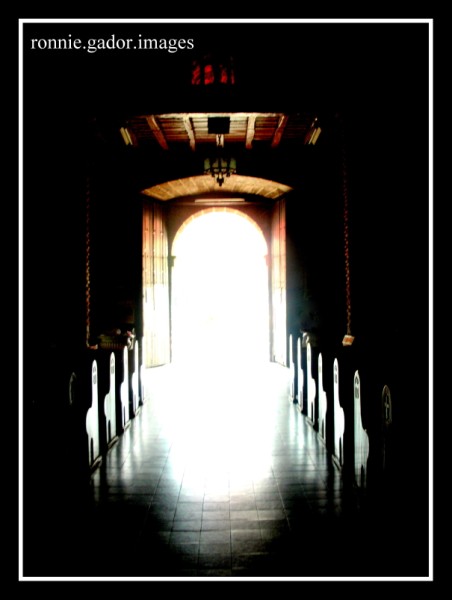
The last time I visited the Kipping Mansion was in 1991, no digicams, not much of the internet, mobile phones were still struggling for higher pixels thus, to shoot objects and memories was quite expensive. To maximize rolls of 36 shot films if you could afford, was somewhat a status symbol.
Every Filipino student of Philippine literature and Filipino language subjects come across the life of Leonor. Known to few, she's a distant second cousin of Philippine National Hero Jose Rizal. Antonio Rivera was Leonor's father and a cousin of Jose Rizal's father, Francisco Mercado, thus, Jose calling Antonio his uncle.
I went to Camiling to accompany my students at DLSU Manila for their research project. The letter I gave to the group wasn't enough to gain entrance to the mansion. Their thought of bringing with them their Instructor was the best passport. I said, Yes... eventually.
There is an annex to the mansion that houses the memorabilia of Leonor. I've heard that this is now well kept and indeed much better.
Me and my students were toured by the relatives of Leonor around the mansion. I marveled at the antique collections of course.
The granddaughter, grandnieces and grandnephews of Leonor were very accommodating. They explained in detail every piece of furniture and object in the annex museum.
Upon gazing at Leonor's collection, I can't help but recall all the lessons I've learned and was teaching at the same time about Rizal and his greatest love.
Questions started... Why was the wedding gown of Leonor blue? Is this blow up picture of Rizal authentic from Europe? How come it's embroidered? What happened to the letters sent by Jose to Leonor? Did Leonor die lonely?
The Answers to these questions? Let your eyes start to move while probing inside the museum.
Most of these questions were of course answered by the surviving relatives of the Rivera-Kippings. The fact that those answers were also relayed to them by their elders. Lots of undying proof of love mementoes are waiting for you at the house of Leonor Rivera-Kipping Mansion.


Every Filipino student of Philippine literature and Filipino language subjects come across the life of Leonor. Known to few, she's a distant second cousin of Philippine National Hero Jose Rizal. Antonio Rivera was Leonor's father and a cousin of Jose Rizal's father, Francisco Mercado, thus, Jose calling Antonio his uncle.
I went to Camiling to accompany my students at DLSU Manila for their research project. The letter I gave to the group wasn't enough to gain entrance to the mansion. Their thought of bringing with them their Instructor was the best passport. I said, Yes... eventually.
There is an annex to the mansion that houses the memorabilia of Leonor. I've heard that this is now well kept and indeed much better.
Me and my students were toured by the relatives of Leonor around the mansion. I marveled at the antique collections of course.
The granddaughter, grandnieces and grandnephews of Leonor were very accommodating. They explained in detail every piece of furniture and object in the annex museum.
Upon gazing at Leonor's collection, I can't help but recall all the lessons I've learned and was teaching at the same time about Rizal and his greatest love.
Questions started... Why was the wedding gown of Leonor blue? Is this blow up picture of Rizal authentic from Europe? How come it's embroidered? What happened to the letters sent by Jose to Leonor? Did Leonor die lonely?
The Answers to these questions? Let your eyes start to move while probing inside the museum.
Most of these questions were of course answered by the surviving relatives of the Rivera-Kippings. The fact that those answers were also relayed to them by their elders. Lots of undying proof of love mementoes are waiting for you at the house of Leonor Rivera-Kipping Mansion.